A free AI site audit tool built on a real framework
Most free site audit tools only check traditional SEO signals: title tags, meta descriptions, headings. This one does that too, but it also checks whether AI systems like ChatGPT, Perplexity, and Google's AI Overviews can actually find, read, and cite your page. Search is no longer just a results page, it's an answer engine, and a site that ranks well but is invisible to AI crawlers is only half optimized.
I built this tool on the same Rank. Earn. Scale. Framework I use to build and evaluate every product on this site. Discoverability is stage one, and this audit exists to show you exactly where that stage is breaking down on your own site, technically and for AI.
I run technical SEO and content audits professionally, and I got tired of every free tool I tried either gating the useful checks behind a signup, stopping at traditional SEO as if 2019 never ended, or burying the actual fixes under a wall of jargon. So I built the audit I actually wanted to use on my own client work, and then made it free for anyone else who needs the same thing.
What this free AI site audit tool checks
Technical SEO
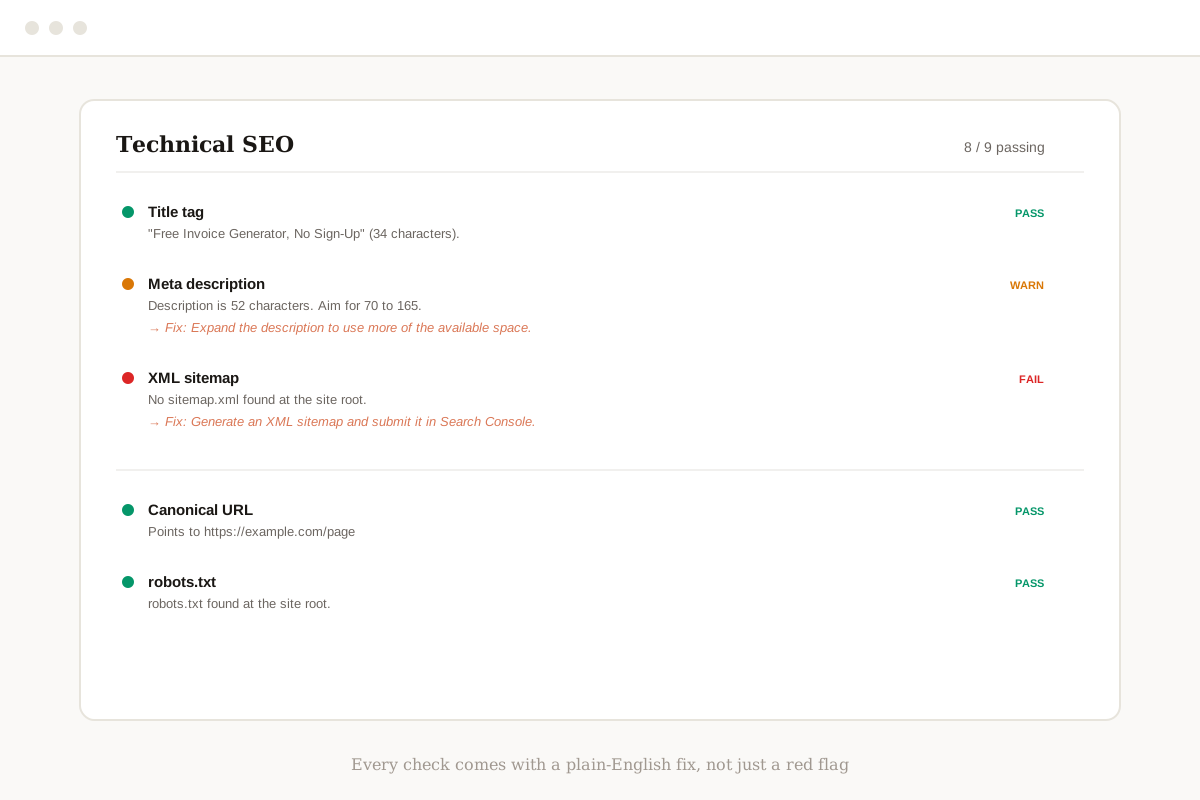
Title tags, meta descriptions, canonical URLs, viewport, favicon, structured data, indexability, robots.txt, sitemap.xml, and mixed content, the fundamentals that determine whether Google can crawl and rank the page at all.
AI Visibility
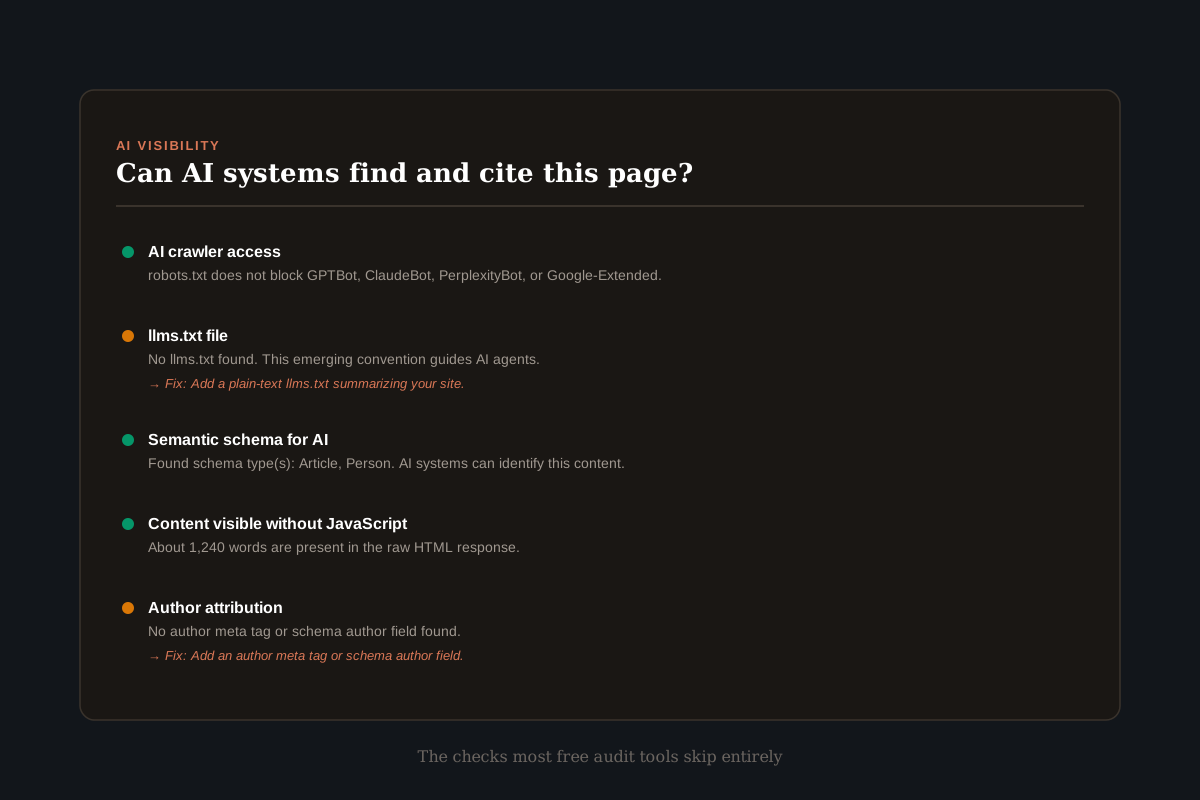
Whether AI crawlers like GPTBot and ClaudeBot are blocked, whether an llms.txt file exists, whether your schema clearly identifies the content type, whether content renders without JavaScript, and whether authorship is attributed.
Content & Accessibility
Heading structure, content length, image alt text coverage, and language declaration, the signals that affect both search rankings and how usable the page is for real visitors.
Social Sharing
Open Graph and Twitter Card tags, so links shared on LinkedIn, X, Slack, or iMessage render a proper preview instead of a broken card.
Security Headers
HSTS, X-Content-Type-Options, and clickjacking protection. Increasingly, both users and search engines treat a secure site as a baseline expectation, not a bonus.
Performance
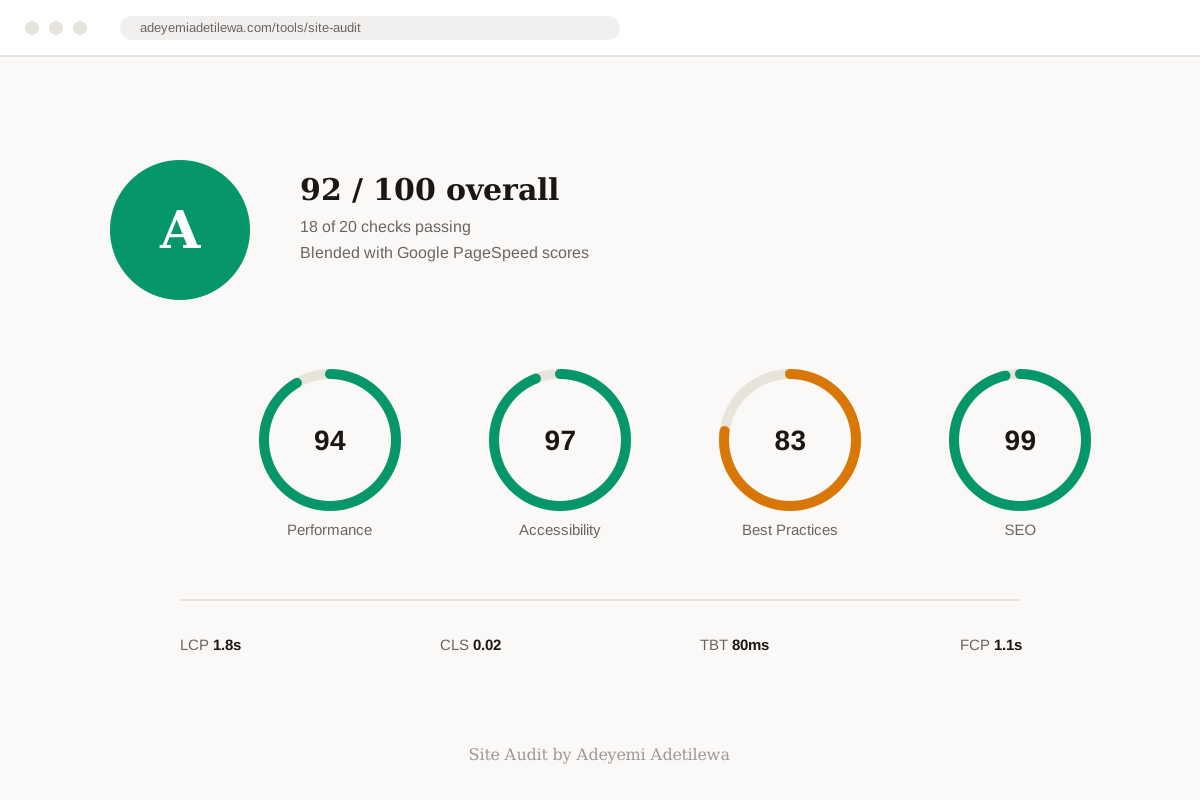
Google PageSpeed scores for Performance, Accessibility, Best Practices, and SEO, plus Core Web Vitals (LCP, CLS, TBT, FCP) pulled straight from the same engine Google itself uses.
Why AI visibility matters now, not eventually
A growing share of searches never reach a traditional results page at all. Someone asks ChatGPT a question, Perplexity synthesizes an answer from a handful of sources, or Google's AI Overview answers the query before a single blue link loads. If your page is not one of the sources those systems can read and trust, you do not just rank lower, you disappear from the answer entirely.
Most site audit tools were built before this shift and still only check whether Googlebot can crawl a page. This one checks that too, but it also checks the things that specifically determine whether GPTBot, ClaudeBot, and PerplexityBot can access your content, whether your structured data tells those systems what kind of content they're looking at, and whether your actual words are present in the raw HTML response, since most AI crawlers, unlike a real browser, do not execute JavaScript. A page that looks perfect to a human visitor can be functionally blank to an AI crawler if the content only appears after a script runs.
None of this replaces traditional SEO, it sits alongside it. Rank, the first stage of my framework, now means being discoverable in both places.
I'd rather a tool tell you honestly that your AI visibility is weak than have you find out the hard way, months from now, when you notice AI answer engines keep citing your competitors and never you. That gap compounds. The earlier you close it, the less ground you have to make up later.
Common issues this catches
The invisible AI crawler block
A robots.txt rule added years ago to stop an aggressive scraper, or a boilerplate rule copied from a template, ends up silently blocking GPTBot, ClaudeBot, or PerplexityBot too. Nobody notices, because the site still looks completely normal to human visitors and to Google.
Content that only exists after JavaScript runs
Plenty of modern sites render their main content client-side. A human sees a finished page, a search engine with rendering support sees it eventually, but a lot of AI crawlers see an empty shell. The words that would get you cited are technically there, just not in the response the crawler actually reads.
A meta description nobody wrote
When there's no meta description, Google and AI systems generate their own summary by guessing from page content, and that guess is rarely as good as a sentence you'd write yourself. This is one of the fastest fixes on the entire checklist.
Structured data with no clear type
A page can have JSON-LD on it and still fail this check, if that JSON-LD never declares what the content actually is. "Some structured data" is not the same as "structured data an AI system can act on."
Security headers nobody set on purpose
Missing HSTS or X-Content-Type-Options headers are rarely a deliberate choice, they're usually just what a default server configuration ships with. Small fix, meaningful signal.
How it works
01
Enter your URL
No account, no email, no credit card. Type in the address and submit.
02
The tool runs every check
Your page is fetched and scanned across all six categories, plus a live Google PageSpeed scan, usually finishing well under 60 seconds.
03
Get a graded, exportable report
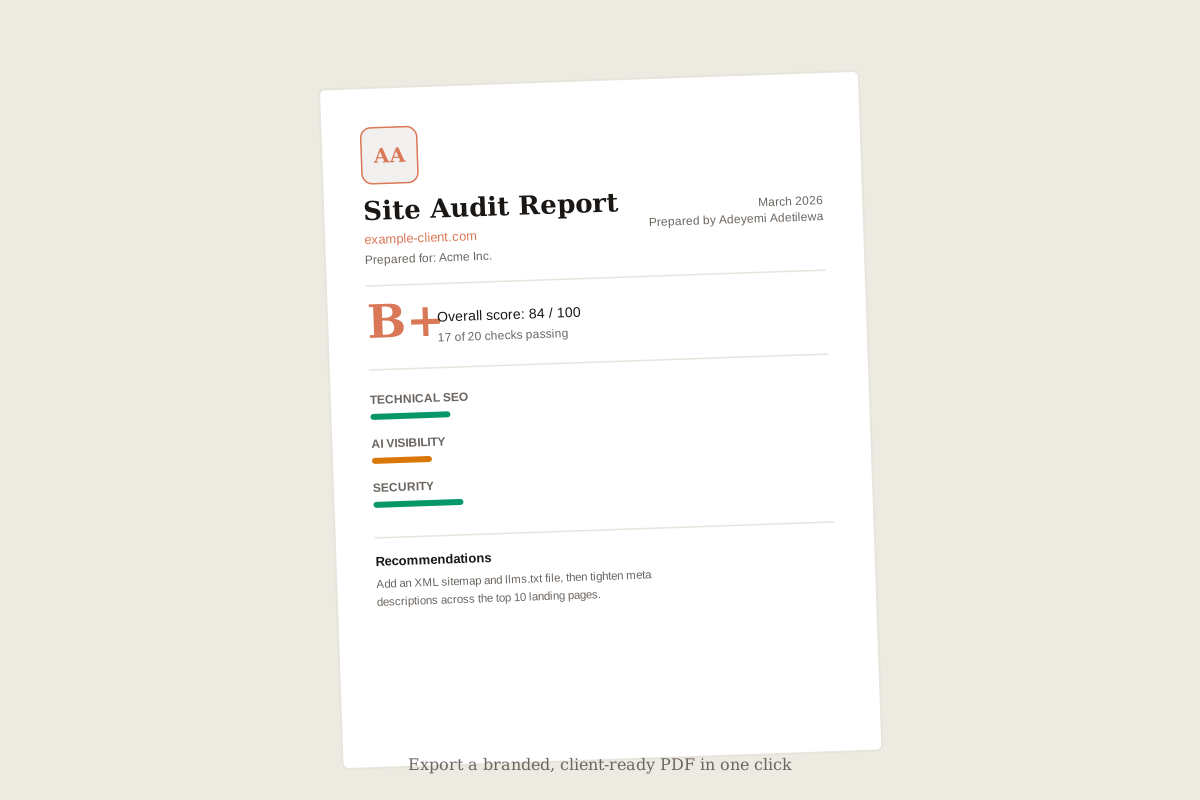
A letter grade, a full breakdown by category, plain-English fixes for anything failing, and a customizable PDF you can download or send to a client.
Who this tool is for
Agencies and freelancers
Run a client's site through the audit before a pitch or a renewal conversation, export the branded PDF with your own logo and the client's name, and walk into the call with specifics instead of generalities. It turns "your site could use some SEO work" into a numbered list of exactly what's wrong and how to fix it.
Indie founders and makers
Check a new product page or landing page before you spend money driving traffic to it. Most launch-day SEO mistakes are boring and fixable in minutes, a missing meta description, no Open Graph image, an accidental noindex tag, but they quietly cap how much of your paid or organic traffic ever converts.
In-house marketers
Get a fast, jargon-free second opinion on a page without waiting on a dev team's backlog or paying for an external audit. Useful for a quick pre-launch check, a monthly health check on your top landing pages, or settling a debate about whether a page is actually "SEO ready."
Developers
Verify the technical fundamentals, headers, structured data, indexability, canonical tags, are actually in place before a launch, not after a marketer notices organic traffic quietly dropped. It's a fast way to catch what a build process or a CMS migration silently broke.
What you'll get in your report
Every audit produces a graded, categorized breakdown with a Google search snippet preview, Core Web Vitals, and a fix-it tip on every warning or failure. You can export the whole thing as a PDF, add your own logo and client name, pick which sections to include, and attach your own recommendations before sending it out. Nothing about the report requires you to already know what any of the terms mean, every check is written in plain language first, with the technical detail underneath for anyone who wants it.
Frequently asked questions
Is this site audit tool really free?
Yes. There is no sign-up, no email gate, and no paywall. Every check, including the AI visibility checklist and the PageSpeed scores, is free to run as many times as you want.
What makes this an AI site audit tool, not just an SEO checker?
Alongside standard technical SEO checks, this tool evaluates AI-specific signals: whether major AI crawlers (GPTBot, ClaudeBot, PerplexityBot, Google-Extended, and others) are blocked in robots.txt, whether an llms.txt file exists, whether your page has semantic schema AI systems can parse, whether your content is visible without JavaScript, and whether author attribution is present. Those are the signals that affect whether AI answer engines like ChatGPT and Perplexity can find, read, and cite your page.
How is my data used?
The tool fetches the public HTML of the URL you submit and analyzes it on the server. Nothing is stored beyond a short-lived cache used to avoid re-scanning the same URL repeatedly, and results are not shared with any third party beyond the Google PageSpeed Insights API call needed for performance scores.
How long does an audit take?
Most audits complete in well under a minute. Fetching your page and running the SEO and AI visibility checks is fast, the PageSpeed performance check is the slower half since it runs a full Lighthouse analysis, occasionally taking up to 60 seconds for larger or slower sites.
Can I share or download the results?
Yes. Every audit can be exported as a customizable PDF report, with your own logo, client name, and notes, which makes it easy to share with a client, a team, or a developer.
What is the Rank. Earn. Scale. Framework this tool is based on?
It is the product growth methodology I use to build and evaluate every product on this site: can people discover it, can it earn sustainable revenue, and can it scale without constant manual effort. This audit applies the same discoverability principles to your own site.
Is a free site audit tool as good as a paid one?
For the checks that matter most, yes. This tool runs the same underlying Google PageSpeed Insights engine that paid tools rely on, plus a technical SEO, AI visibility, content, social, and security checklist built from real launch-readiness criteria. What you do not get is ongoing monitoring, historical tracking, or a dedicated account manager, this is built for a fast, honest snapshot, not an enterprise dashboard.
Does this tool work on any website, or just WordPress or specific platforms?
Any public website. It fetches the raw HTML of whatever URL you submit, so it works the same whether the site is built on WordPress, Webflow, Shopify, a custom framework, or anything else.