My Framework
The Rank. Earn. Scale. (RES) Framework
By Adeyemi Adetilewa
Every digital product I've built, from a bulk SMS business in 2013 to the tools on this site today, gets evaluated against the same three questions. I call it the Rank. Earn. Scale. Framework, and it's the closest thing I have to a philosophy of building.
Why I built this framework
For most of my career, I measured success the way most SEOs and content marketers do: rankings, traffic, impressions, backlinks. Those numbers mattered because they represented visibility, and visibility is real. But the longer I worked across different products and clients, the more a pattern kept repeating.
I'd see sites that ranked exceptionally well and still struggled to turn that into an actual business. I'd see products that made money but couldn't run without someone manually holding them together. And I'd see genuinely good products that never found an audience because nobody could discover them in the first place. Ranking alone wasn't enough. Neither was revenue on its own, and neither was automation on its own. The products and businesses that actually lasted got all three right: people could find them, they generated real value, and they kept working without falling apart under their own growth.
That's when the question I asked myself changed. I stopped asking “how do I rank this?” and started asking “how do I build something that ranks, earns, and scales?” Everything I've built since, including the free tools on this site, gets run through that filter before I call it done.
What the RES Framework actually is
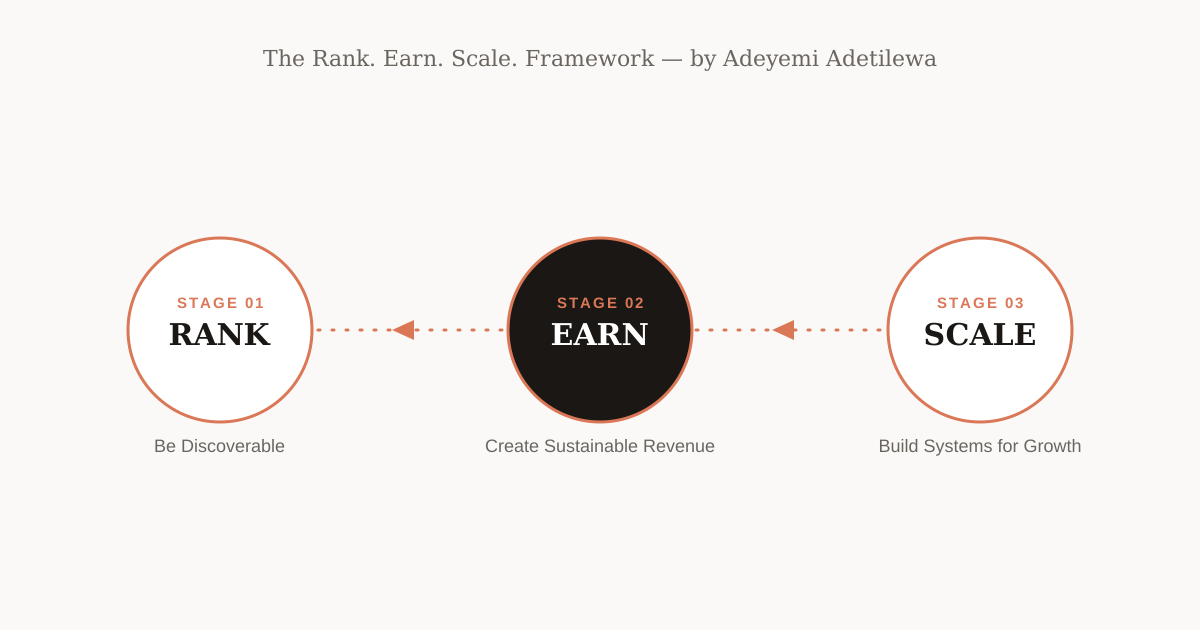
The Rank. Earn. Scale. Framework is how I evaluate and build digital products. It pulls together technical SEO, AI visibility, content strategy, product thinking, monetization, and operations into one repeatable process, rather than treating them as separate disciplines handled by separate teams at separate times.
It isn't an SEO framework, and it isn't a marketing funnel. It's the lens I use to decide whether something is actually finished, or whether it just looks finished.
STAGE ONE
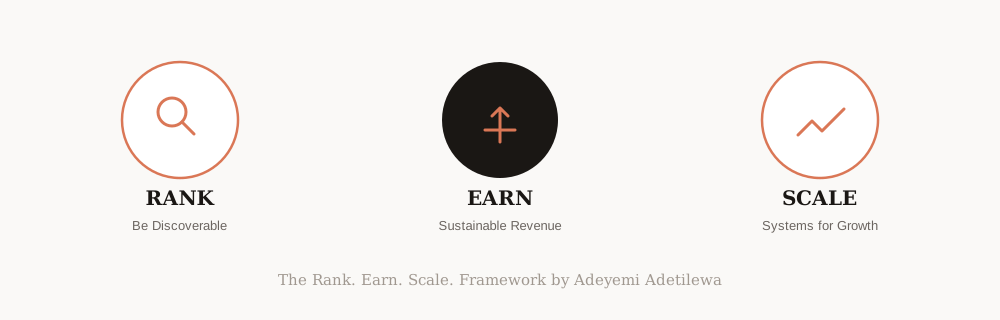
Rank: build discoverability
Every product starts with visibility. The best product in the world doesn't matter if nobody knows it exists, and today discoverability means more than a blue link on Google. It means showing up in Google AI Overviews, ChatGPT, Perplexity, Gemini, and Bing, and it means having enough topical authority and enough genuine brand mentions that people recommend you without being asked to.
Ranking was never about gaming an algorithm, and that's truer now than it's ever been. It's about becoming the best available answer to a real problem someone has.
STAGE TWO
Earn: turn attention into revenue
Traffic is a means, not an outcome. I've watched plenty of businesses celebrate a traffic graph going up and to the right while quietly ignoring whether any of it converts into something that keeps the lights on, subscriptions, digital products, consulting, sponsorships, affiliate revenue, marketplace fees, advertising, memberships, whatever fits the product.
The order matters here. A product has to create genuine value before it tries to capture value. When it solves a real problem consistently, revenue tends to follow as a natural consequence rather than something you have to force.
STAGE THREE
Scale: build systems that grow
I learned this stage the hard way, back in 2013, running my first business selling bulk SMS units. Growth without systems gets expensive fast, and eventually it gets exhausting. Scaling was never really about getting bigger. It's about producing more output without needing a proportional increase in my own effort: automation, AI-assisted workflows, documented processes, and infrastructure that doesn't need me standing next to it.
The goal is a product that outlasts the amount of attention I can give it on any given day.
The RES Framework in practice
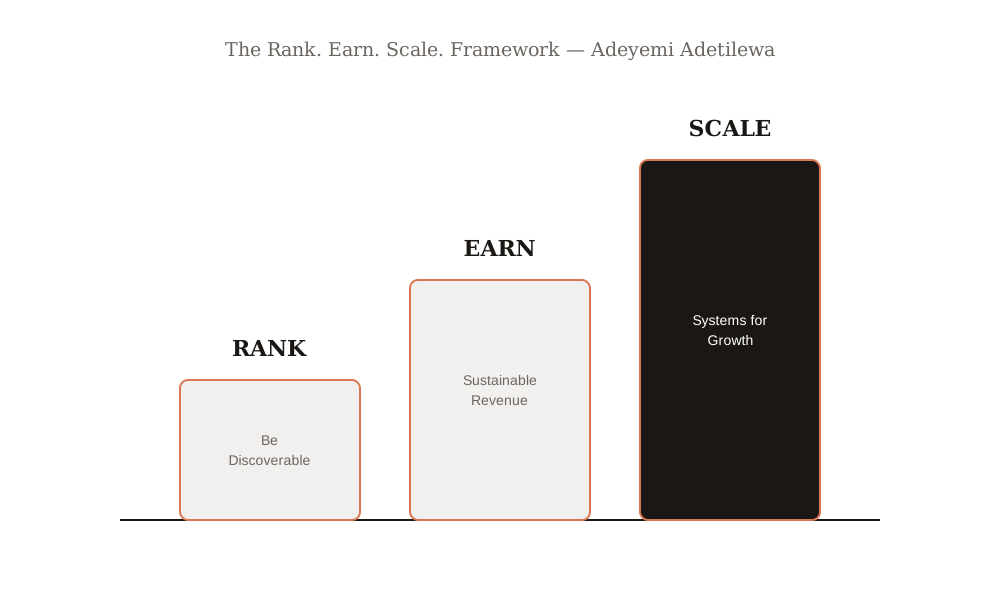
Every product I build, and every website I audit, gets asked the same three questions before I call anything finished:
RANK
Can people discover it?
EARN
Can it generate sustainable revenue?
SCALE
Can it keep growing efficiently?
If the honest answer to any of those is no, the work isn't finished yet, no matter how good it looks on the surface.
Who this is for
I built this framework for my own work, but it holds up for anyone building something online: SaaS founders, product marketers, content businesses, AI startups, publishers, e-commerce brands, agencies, consultants, and independent creators. Whether you're shipping your first product or you're years into scaling one, the same three questions apply.
How I use it day to day
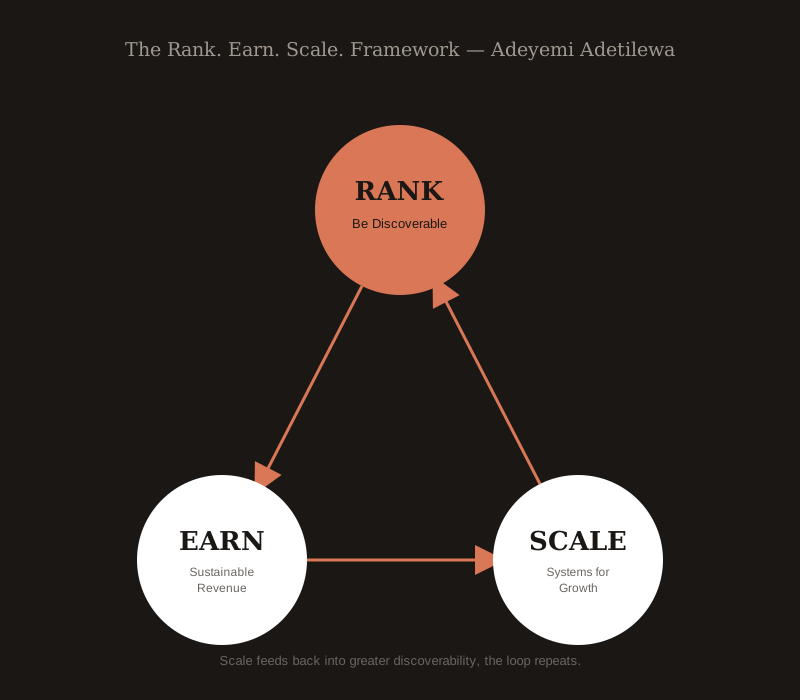
This framework runs underneath product development, technical SEO, AI visibility work, content strategy, product marketing, website architecture, growth strategy, automation, and revenue optimization on every project I take on. It's the lens, not a checklist I fill out once and forget.
See it applied to your own website
My free Website Growth Audit evaluates your site's technical SEO, performance, and AI visibility using the same RES Framework principles I use when I build and scale my own products.
Get a Free Website Growth AuditAbout the creator
I'm Adeyemi Adetilewa, a product growth leader, technical SEO specialist, and product builder with more than a decade of experience building digital products that generate sustainable organic growth. Over years of helping businesses grow through search, content, AI, and product strategy, that work evolved into the repeatable methodology on this page.
I keep refining the Rank. Earn. Scale. Framework as search evolves, AI reshapes discovery, and the way people find and choose digital products keeps changing.
Read my full storyRelated
Adeyemi Adetilewa
SEO strategy, content marketing, and building AI products for B2B SaaS using the Rank. Earn. Scale. Framework. Available for global roles.
Services Offered by Adeyemi Adetilewa
A list of services offered by Adeyemi Adetilewa, including content, product, and lifecycle marketing.
Newsletter
Subscribe to The Digital Strategy, a free newsletter on product building, content strategy, SEO, and growth from Adeyemi Adetilewa.